Fire safety is an important consideration when selecting silicone hoses for railway vehicles and other transportation equipment. In these environments, hose materials may need to withstand elevated temperatures while meeting specific flame resistance and smoke safety requirements. A standard silicone hose may offer excellent heat resistance, but this does not automatically mean it is suitable for applications where fire protection standards apply.
For engineers, purchasing teams, and railway equipment manufacturers, two specifications are particularly important: UL94 V-0 and EN 45545-2. Both relate to fire safety, but they evaluate different aspects of material and product performance. Understanding the difference helps buyers select the right fire retardant silicone hose for their intended application.
SUNRISE supplies flame-retardant silicone hoses designed for applications requiring UL94 V-0 and EN 45545-2 compliance. This guide explains the relevant standards, railway application considerations, and key factors to review when specifying a custom silicone hose.
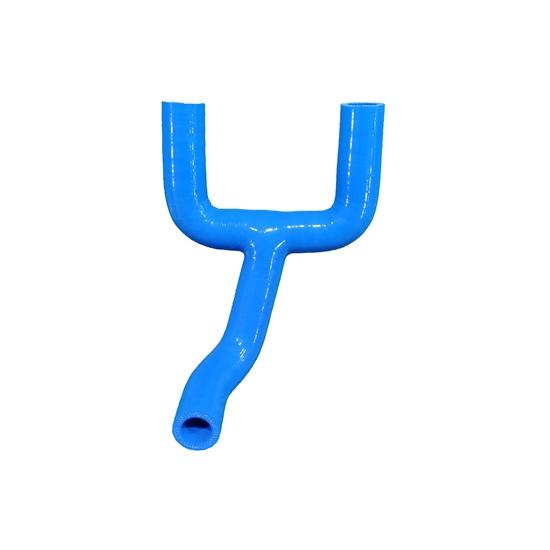
What Is UL94 V-0 in Fire Retardant Silicone Hose?
UL94 is a standard developed by UL Solutions for evaluating the flammability of plastic materials under controlled laboratory conditions. It classifies materials according to their response to a specified flame exposure. UL94 V-0 is one of the vertical burning classifications.
For a material to achieve UL94 V-0, it must meet specific requirements during the test, including:
- Each flame application must result in the flame extinguishing within 10 seconds.
- The total afterflame time for the specified test sequence must not exceed 50 seconds.
- Flaming particles or drops must not ignite the cotton indicator beneath the test specimen.
- Afterflame and afterglow times must meet the applicable UL94 V-0 criteria.
In practical terms, UL94 V-0 indicates that the tested material has limited burning behavior under the defined test conditions. It is useful when evaluating flame-retardant silicone compounds for electrical, industrial, and transportation-related applications.
However, it is important to understand that UL94 V-0 is a material flammability classification. A V-0 test result alone does not establish that a complete hose assembly meets every fire safety requirement for railway use. Buyers should confirm the tested material, product construction, and applicable certification documentation.
EN 45545-2: Fire Protection Requirements for Railway Vehicles
EN 45545-2 is a European railway fire protection standard that addresses the fire behavior of materials and components used in railway vehicles. It is particularly relevant to manufacturers and suppliers involved in passenger rail transportation projects.
Unlike UL94, which focuses on the flammability classification of a material, EN 45545-2 considers fire behavior in the context of railway vehicle applications. Its requirements include different test methods and performance criteria depending on the product category and intended use.
The standard uses Hazard Levels HL1, HL2, and HL3 to reflect different operating and design conditions. The applicable hazard level depends on factors such as the vehicle's operating environment, design characteristics, and relevant project requirements.
For silicone hose manufacturers, identifying the correct requirement is essential before selecting a flame-retardant compound or developing a hose construction.
Understanding the R23 Requirement
R23 is a requirement category referenced in EN 45545-2 for specific railway applications. It should not be treated as a universal approval for every type of railway hose. The applicable test requirements and hazard level need to be confirmed against the relevant standard edition and the component's intended location and function.
When sourcing an EN 45545-2 compliant silicone hose, buyers should clarify:
- Whether the required application falls under R23.
- Which hazard level applies to the railway vehicle project.
- Whether the supplied test report covers the actual silicone material or finished component.
- Whether additional project-specific fire, smoke, and toxicity requirements apply.
These details help prevent a common sourcing problem: selecting a hose based on a general fire-retardant claim without confirming whether its documented performance matches the railway project's technical specification.
UL94 V-0 vs. EN 45545-2: What Is the Difference?
Although both standards are associated with fire safety, they are not interchangeable. A railway equipment manufacturer may need to consider both material-level flammability performance and application-specific railway fire protection requirements.
| Comparison | UL94 V-0 | EN 45545-2 |
|---|---|---|
| Main focus | Material flammability | Fire protection of railway vehicle materials and components |
| Application | Electrical, industrial, and other material applications | Railway vehicles |
| Evaluation | Vertical burning test classification | Application-related fire performance tests |
| Classification | V-0, V-1, V-2 and other classifications | Requirement sets and hazard levels HL1–HL3 |
| Key consideration | Material test results | Intended railway application and relevant compliance evidence |
For railway projects, a hose that has passed UL94 V-0 testing should not automatically be considered compliant with EN 45545-2. Both requirements should be evaluated independently when specified by the customer or project documentation.
For more information about available product options, visit the fire retardant silicone hose product range from SUNRISE.
Where Are Fire Retardant Silicone Hoses Used in Railway Systems?
Fire-retardant silicone hoses can be considered for railway equipment where flexible connections, temperature resistance, and specified flame performance are required. Their suitability depends on the actual system design, transported medium, operating conditions, and applicable fire protection requirements.
Ventilation and Air Duct Connections
Railway ventilation systems contain various ducts, connectors, and flexible sections. In suitable low-pressure air applications, fire-retardant silicone hoses or duct components can provide flexible connections between equipment and system components.
When selecting a hose for these applications, engineers should consider airflow requirements, operating temperature, vibration, installation space, and the required fire performance.
Electrical and Equipment Protection
Some railway equipment installations require flame-retardant flexible silicone components around electrical or mechanical systems. Depending on the design, these may be used for protective connections or specific equipment interfaces.
However, a silicone hose should not be assumed to provide electrical insulation or cable protection simply because it achieves UL94 V-0. Electrical properties, dimensions, and the required protection function must be specified separately.
Heating and Auxiliary Equipment Systems
Heating and auxiliary equipment can expose nearby flexible components to elevated temperatures and continuous operating stress. Flame-retardant silicone hoses may be suitable for selected air or fluid connections when the silicone compound and hose construction are compatible with the operating medium.
For these applications, temperature resistance should be evaluated together with pressure, vibration, chemical compatibility, and the relevant railway fire safety requirements.
How to Select the Right Fire Retardant Silicone Hose
Meeting a flame-retardant requirement is only one part of hose selection. A product may achieve the required fire classification but still be unsuitable if its dimensions, reinforcement, or mechanical properties do not match the application.
Flame Retardancy and Certification
Start by identifying whether the project requires UL94 V-0, EN 45545-2, or both. Ask the supplier for the relevant test reports and confirm the scope of the documents. Check that the tested silicone material corresponds to the material used in the supplied hose.
Temperature and Operating Conditions
Silicone rubber is widely used in high-temperature environments, but its performance depends on the compound, hose structure, exposure time, and working conditions. Buyers should provide both continuous operating temperatures and any short-term peak temperatures.
Dimensions and Reinforcement
Inside diameter, outside diameter, wall thickness, length, and bending radius all affect installation and performance. If the hose needs to withstand internal pressure, vacuum, or repeated movement, reinforcement may also be necessary.
Depending on the application, manufacturers can evaluate polyester, aramid, fiberglass, or wire reinforcement. The correct construction should be selected according to actual mechanical requirements rather than assuming that every reinforced hose offers the same performance.
For applications requiring additional structural support, buyers can also explore special-use silicone hose solutions to compare different hose constructions.
Chemical Compatibility and Service Life
If the hose transports coolant, air, water, or other media, chemical compatibility must be checked before production. Exposure to oils, cleaning agents, additives, and other chemicals can influence the service life of silicone materials.
Buyers should also consider vibration, abrasion, compression, installation stress, and maintenance conditions when evaluating long-term performance.
Custom Fire Retardant Silicone Hose Manufacturing at SUNRISE
Different railway systems and industrial equipment require different hose geometries and performance specifications. Standard silicone hoses may not always fit the installation space or meet the required material specifications.
SUNRISE is a silicone hose manufacturer specializing in custom silicone hose and molded silicone products. The company supplies flame-retardant silicone hoses for applications requiring UL94 V-0 and EN 45545-2 R23 specifications.
Custom manufacturing can be discussed according to customer drawings, samples, or application requirements. Before production, buyers can provide the following information to help evaluate a suitable hose design:
- Required standard and hazard level, where applicable.
- Inner diameter, outer diameter, wall thickness, and hose length.
- Operating temperature and working pressure.
- Transported medium and environmental conditions.
- Required reinforcement, shape, and connection structure.
- Applicable test reports and certification documentation.
For railway and other fire-sensitive applications, compliance documentation is an important part of supplier evaluation. SUNRISE provides relevant silicone hose certificates and test reports to help buyers verify material performance and assess whether the available testing evidence meets their project requirements.
For applications with specific fire safety requirements, SUNRISE offers UL94 V-0 and EN 45545-2 R23 fire retardant silicone hoses, designed for applications requiring specific flame-retardant performance and compliance documentation.
Choosing the right flame-retardant hose starts with understanding the application, not simply comparing material classifications. By confirming the relevant standards, mechanical requirements, and documentation before production, railway equipment manufacturers can make more informed decisions when sourcing custom silicone hose solutions.
Frequently Asked Questions
What does UL94 V-0 mean for silicone hose?
UL94 V-0 is a vertical burning classification indicating that a tested material meets specific flame-extinguishing and flaming-drip requirements. It is commonly considered when selecting flame-retardant silicone materials for industrial and electrical applications.
Is UL94 V-0 silicone hose suitable for railway applications?
It may be suitable for certain railway applications, but UL94 V-0 alone does not establish EN 45545-2 compliance. Buyers should confirm the applicable railway requirement, hazard level, product test evidence, and project specifications.
What is the difference between UL94 V-0 and EN 45545-2?
UL94 V-0 evaluates material flammability through a vertical burning test, while EN 45545-2 addresses fire protection requirements for materials and components used in railway vehicles. They have different testing scopes and should not be treated as interchangeable.
What is EN 45545-2 R23?
R23 is a requirement category referenced in EN 45545-2 for specific railway applications. The applicable hazard level and testing requirements should be confirmed according to the component's intended use and the relevant standard edition.
Can fire retardant silicone hoses be customized?
Yes. Custom fire-retardant silicone hoses can be developed according to drawings, samples, dimensions, reinforcement requirements, and specified fire performance standards. SUNRISE accepts custom silicone hose requirements for different industrial and railway applications.